The Allscape Patio Signature Series motorized pergola is designed for high-end outdoor spaces where structure, comfort, control, and visual presence all matter. A proprietary, spec-upgraded system built to a standard above conventional motorized pergolas — available exclusively through Allscape Patio design-build projects.
A motorized pergola should do more than cover part of the space. It should improve how the outdoor space looks, feels, and functions — adding comfort, control, and stronger visual presence while still feeling like it truly belongs with the home. The Signature Series is our proprietary motorized pergola system, specified and fabricated to structural and architectural standards that conventional motorized pergolas do not meet. Every installation is approached with closer attention to proportion, materials, lighting, surrounding features, and the overall composition so the finished result feels elevated rather than standard.

A motorized pergola changes more than the amount of sun overhead. It changes how the space can be used, how long it stays comfortable, and how complete the setting feels once everything is in place. The right structure adds control, stronger visual presence, and a more refined outdoor experience — whether it stands on its own or anchors a larger design.
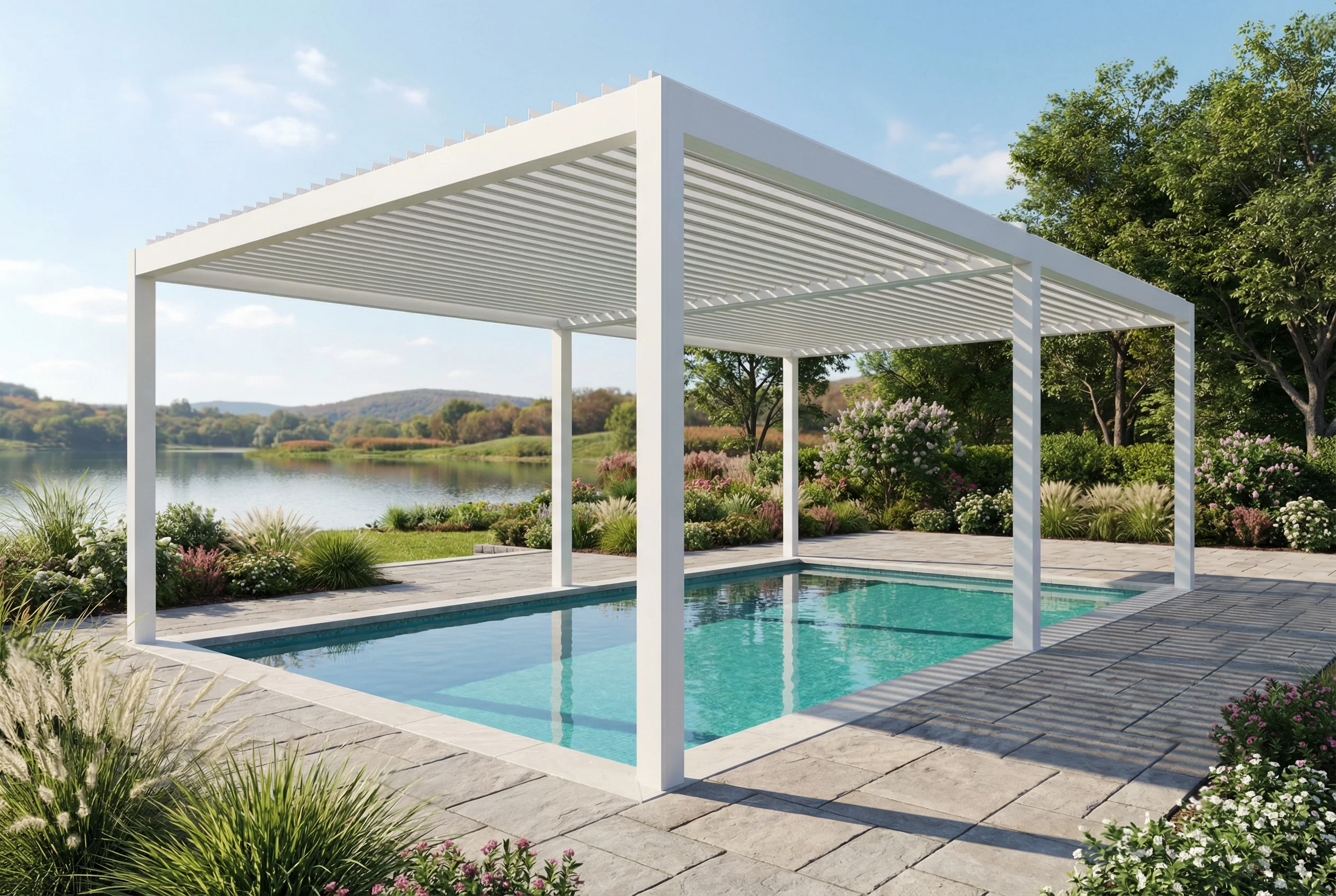
Most motorized pergolas are positioned as patio shade structures. Over a pool, the idea becomes something far more distinctive. The space feels more architectural, more immersive, and far less typical than a standard backyard layout. It is one of the clearest examples of how a motorized pergola can reshape the entire experience of the setting around it.

With a louvered wind wall integrated into the pergola, this patio gains another level of comfort and control beyond the roof above. It helps reduce wind, adds privacy, and makes the seating area feel more usable without losing the openness that makes the structure appealing in the first place. It is one of the clearest ways this motorized pergola becomes more than a standard overhead shade system.

When the rear louvers are closed, the pergola takes on a more protected character. The patio space feels more private, more sheltered, and more controlled while still maintaining a clean architectural look. This kind of louvered wind wall adds capability that most motorized pergolas simply do not offer, and it changes how comfortable and complete the space feels in actual use.
Many motorized pergolas promise adjustable shade, weather protection, and modern convenience. The more important differences are in the structure, the execution, and how convincing the pergola feels once it becomes a permanent part of the home. The Signature Series is built specifically to that standard — more reinforced, more substantial, and engineered to perform and present above what conventional motorized pergolas offer.
For homeowners who want more than a light, interchangeable pergola feel, the structure itself matters. The Signature Series is built with heavier structural members, reinforced connection points, and a more substantial overall presence appropriate for a serious outdoor setting.
The Signature Series is not limited to a single expression — it supports over-pool installations, louvered wind walls, hybrid material configurations, and other specialized directions when the project calls for them.
The pergola should feel chosen for the house and outdoor setting around it, not dropped in as a generic product that could have gone anywhere.
The real test is not the first impression alone. It is whether the pergola still feels visually right, structurally convincing, and worth the investment once the space is fully lived in.
The rotating louvers allow the pergola to shift quickly between open sky, filtered light, and greater protection overhead. It is a simple motion, but it changes how the patio feels, how the space is used, and how adaptable the setting becomes throughout the day.
